Snappet
Why does routine matter for dogs?
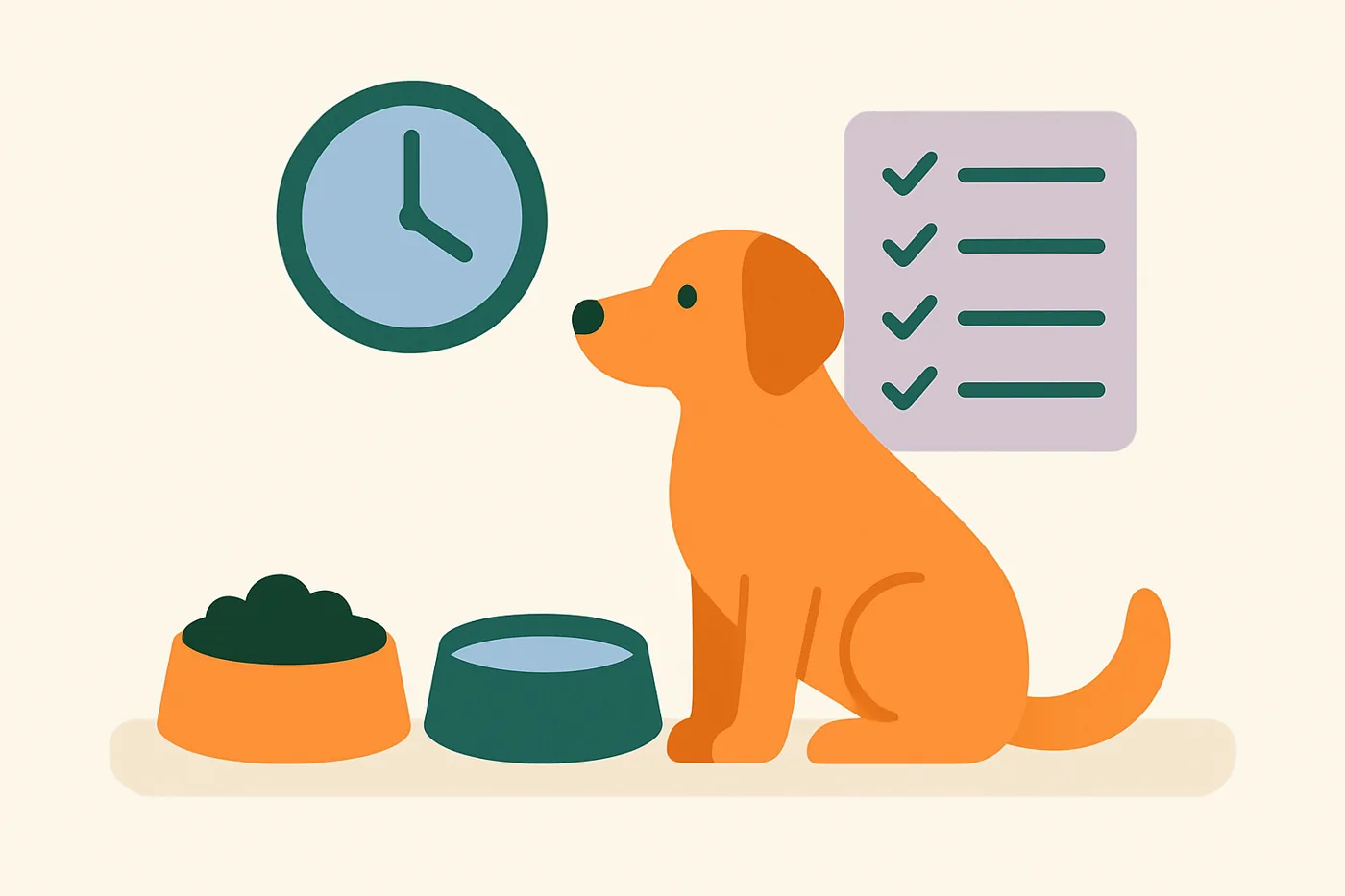
A consistent food and water routine supports healthy weight management, easier digestion, and a more predictable potty/walk schedule at home. It also helps prevent common mistakes in multi-person households—like “overfeeding” (stacking treats, or two people giving the same meal).
Still, there isn’t one single “right” plan: age, weight, breed, activity level, neuter status, and medical conditions all change your dog’s needs. Work with your veterinarian to tailor the best routine for your dog.
How many meals should a dog eat? (By age)
The general approach is: the younger the dog, the more frequent the meals; then move into a stable routine in adulthood. The suggestions below are a starting point for most healthy dogs.
0–4 months: 4 meals
Puppies have small stomachs and high energy needs. Four small meals a day can help reduce blood sugar swings and avoid overloading the stomach.
- Sample times: 07:00 / 11:00 / 15:00 / 19:00
- If the overnight fast feels too long, a late mini-meal can be considered with your vet’s guidance.
4–6 months: 3 meals
As the digestive system matures, three meals works well for many puppies. Because growth is rapid in this phase, measured feeding matters more than “eyeballing it.”
- Sample times: 07:00 / 13:00 / 19:00
6–12 months: 2–3 meals
This depends on breed and adult size. Large breeds grow for longer and may do better with three meals for a while; small breeds often transition to two meals earlier.
- If your dog is prone to bloat or eats too fast, smaller, more frequent meals can help.
Adult (1–7 years): usually 2 meals
For many family dogs, two meals (morning/evening) is practical for appetite control and training routines. One meal a day can work for some dogs, but it may increase issues like extreme hunger, vomiting, or gulping food too quickly.
Senior (7+): often 2–3 smaller meals
Senior dogs may develop a sensitive stomach, dental issues, or metabolic changes. Splitting daily food into 2–3 smaller portions can be easier for some dogs. If your dog has a chronic condition, your veterinarian should set the plan.
How much should a dog eat? A practical, safe approach
The most reliable starting point for “how much food” is the feeding/energy chart on your dog food bag. But those charts are averages—your dog’s true needs vary with activity and body condition.
Step-by-step: setting the right portion
- Target your dog’s ideal weight: If your dog is overweight, planning based on a vet-recommended goal weight (not the current weight) is usually more accurate.
- Find the daily grams on the label: Most foods list either “grams per kg per day” or a “weight range vs. grams” table.
- Divide the daily total by the number of meals: For example, if the daily total is 240 g, with 2 meals that’s 120 g + 120 g.
- Count treats: If training treats and chew products exceed about 10% of daily calories, weight gain can accelerate. If treats go up, reduce the main meal a bit.
- Track for 7–14 days and adjust: Update the total in 5–10% steps based on stool quality, appetite, energy, and weight trend.
Quick check using Body Condition Score (BCS)
The scale alone isn’t enough. You should be able to feel the ribs with light pressure, and the waist should be visible from above. If ribs are clearly visible, the dog may be too thin; if you can’t feel ribs at all, excess weight is more likely. Ask your veterinarian for a quick lesson on BCS scoring.
Why measuring in grams matters
Scoop/cup measurements translate to different grams for different foods. A “one cup” habit can cause big calorie errors—especially in small breeds. Keeping a small digital kitchen scale nearby greatly improves portion consistency.
Dog water intake: how much is normal, when to worry?
Daily “water intake” can change with temperature, activity, diet type (dry/wet), nursing, stress, and illness. As a general reference, many sources cite about 40–60 ml/kg per day for healthy dogs. Dogs eating mostly dry food tend to drink more; dogs on wet food may drink less.
Example calculation
- 5 kg dog: about 200–300 ml/day
- 15 kg dog: about 600–900 ml/day
- 30 kg dog: about 1.2–1.8 L/day
These numbers are not a “target,” but a checkpoint. If you notice a clear increase/decrease, write it down.
Water bowl management: hygiene before “making them drink more”
- Refresh the water at least once a day; more often in hot weather and in multi-dog homes.
- Wash the bowl daily: biofilm buildup can cause odor and make dogs reluctant to drink.
- Place water in multiple spots: helpful in larger homes or for senior dogs.
- Small sips after walks: offer controlled access for the first minutes to prevent gulping.
When should you talk to your vet?
A sudden and persistent change in water intake and urine output (e.g., drinking much more for several days), weight loss, appetite changes, vomiting/diarrhea, or accidents in the house can signal an underlying issue. Don’t restrict water on your own—your dog needs a veterinary evaluation.
Sample daily plans by age + weight
The plans below are examples to help you build consistency. Use your food’s label grams and your veterinarian’s guidance as the primary reference.
Example 1: 3-month-old, 4 kg puppy (4 meals)
- 07:00: 25% of the daily total
- 11:00: 25%
- 15:00: 25%
- 19:00: 25%
For potty training, adding a short outdoor trip 10–20 minutes after each meal can make things easier.
Example 2: 10-month-old, 12 kg adolescent dog (2–3 meals)
- On active days, 3 meals: 35% / 30% / 35%
- On calmer days, 2 meals: 50% / 50%
If your dog gets very hungry, increasing meal frequency is often better tolerated than simply making the morning meal bigger.
Example 3: 5-year-old, 28 kg adult (2 meals)
- 08:00: 50% of the daily total
- 19:00: 50%
If you’re in a treat-heavy training phase, consider reducing main meals by 5–10%.
Sharing responsibilities at home: make “who, what, when” crystal clear
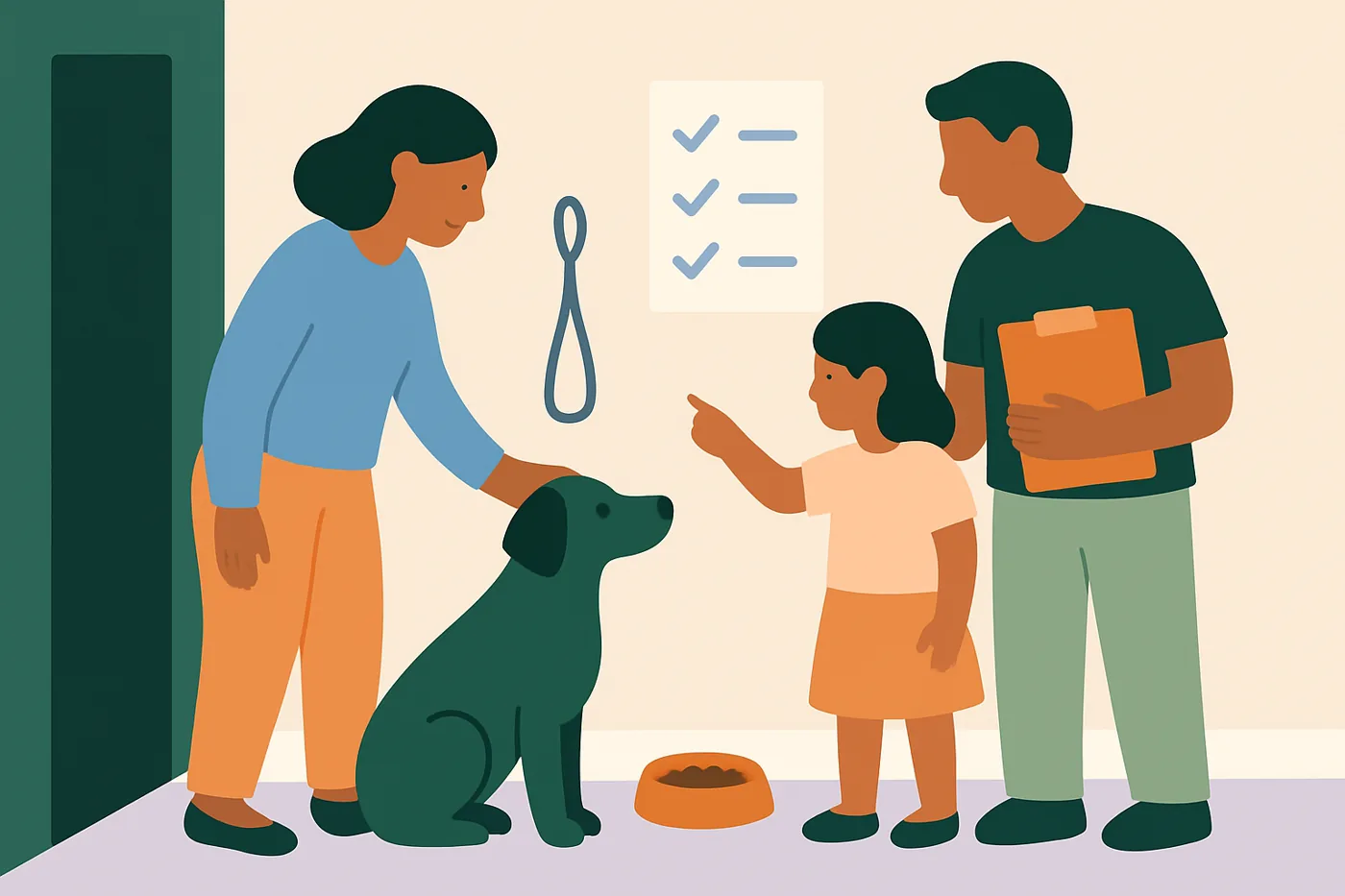
The most common household issues are: the same meal being fed twice, no one noticing an empty water bowl, treats spiraling out of control, and unclear responsibility for walks/potty breaks. The fix is a visible, measurable plan.
1) Assign a primary feeder and a backup
- Primary: measures the food, serves it, marks it as done.
- Backup: steps in only when the primary person is unavailable—this reduces the “we both fed” mistake.
2) Set a “measure + log it” rule
- Every meal is measured in grams.
- Each meal is logged immediately (this can be a fridge checklist).
- If you keep food/water/potty logs in one place using an app like Snappet, everyone can see the latest status at a glance and overlap drops.
3) Manage treats and snacks from a single shared allowance
Treats are “invisible calories.” Make these rules explicit:
- Daily treat limit (by count or grams).
- Who is allowed to give treats (especially important with kids).
- How often and how long chew products are offered.
4) Tie water bowl checks to a daily trigger
- After morning coffee: refresh the water
- Before dinner: wash the bowl
You can also use a visible “water checked” marker so anyone coming in/out during the day can tell it’s been done.
Common mistakes and quick fixes
- Free-feeding (keeping the bowl full all day): Works for some dogs, but for many it makes weight gain easier. Fix: set meal times + pick up the bowl after 15–20 minutes.
- Oversized portions in one meal: Can trigger gulping and vomiting. Fix: split the meal or use a slow feeder (if appropriate).
- Restricting water: Cutting water because “they drink too much” can be risky. Fix: measure, record, and speak with your vet.
- Switching foods abruptly: Can cause diarrhea/vomiting. Fix: transition gradually over 7–10 days (unless your vet says otherwise).
When should you reassess the plan?
In the following periods, “how much food” and meal frequency should be adjusted again:
- The first 1–2 months after spay/neuter (energy needs may change)
- A major increase/decrease in activity (seasonal changes, moving, a new work schedule)
- A new treat/training routine
- Weight change (clear gain/loss over 2–4 weeks)
- Pregnancy/lactation or suspected chronic illness (your vet should set the plan)
FAQ
Question: How many meals should a dog eat—can it be one meal a day?
Answer: Two meals is practical for most adult dogs. One meal may work for some, but if your dog struggles with extreme hunger, fast eating, or stomach sensitivity, two meals are often better tolerated. Discuss your dog’s situation with your veterinarian.
Question: How do I adjust how much my dog eats—is the bag chart enough?
Answer: The bag chart is a solid starting point, but you may need 5–10% adjustments based on activity and body condition. Measure in grams, count treat calories, and watch the trend for 1–2 weeks.
Question: What should I do if my dog’s water intake increases?
Answer: First, measure and note it for a few days (roughly ml/kg/day). Heat, exercise, or more dry food can be factors. If the increase is obvious and persistent, or comes with weight loss, increased urination, or appetite changes, contact your veterinarian—don’t restrict water.