Snappet
Why is a vaccination schedule important?
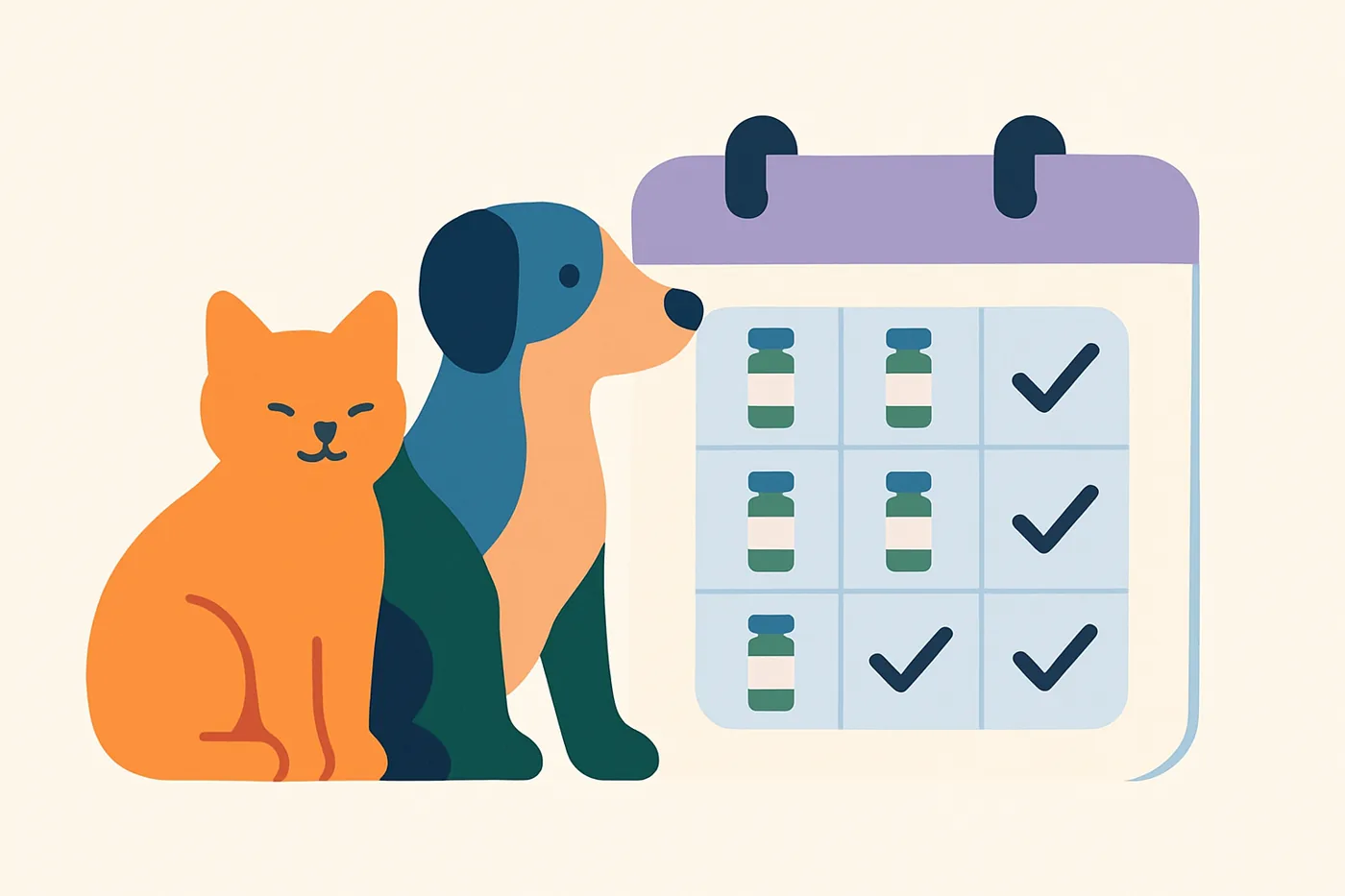
Vaccines in cats and dogs help “train” the immune system against serious—and sometimes fatal—infections such as parvovirus, canine distemper, and panleukopenia. The puppy/kitten stage is especially critical: while protective antibodies from mother’s milk gradually fade, your pet may need multiple doses to build a strong, long-lasting immune response. That’s why a cat vaccination schedule and a dog vaccination schedule are planned based on age and risk level.
Keep in mind: disease risk in your area, lifestyle (outdoor access, boarding/daycare/parks, multi-pet households), chronic conditions, and local regulations (especially rabies) all affect timing. Build the most accurate plan together with your veterinarian.
How do vaccine schedules work? The logic of “series” and “boosters”
Some vaccines are given as a series during puppyhood/kittenhood (e.g., several doses spaced 2–4 weeks apart). This is because a single dose may not be enough during the so-called “immunity window.” After the series is completed, booster doses (often 1 year later and then at set intervals) are given.
Veterinarians usually group vaccines into two categories:
- Core vaccines: Considered essential for most pets.
- Non-core (lifestyle-based) vaccines: Recommended when risk is present (e.g., kennel cough, FeLV).
Dog vaccination schedule (general guide)
The plan below is a “typical” approach; it may vary based on the product used, regional risk, and your veterinarian’s protocol.
6–8 weeks
- Combination (DHPP/DHP): Distemper, adenovirus/hepatitis, parvovirus, parainfluenza.
10–12 weeks
- Combination (2nd dose)
- Lifestyle-based: Bordetella (kennel cough) or leptospirosis may be added depending on region/risk.
14–16 weeks
- Combination (final puppy dose)
- Rabies: In many countries/provinces, regulations require it around this age or starting from 3 months.
Around 12 months (1 year)
- Combination booster
- Rabies booster: Annually or at longer intervals, depending on the product and local rules.
Adult years
- Combination: Your vet may recommend every 1–3 years depending on risk and vaccine type.
- Rabies: Given regularly according to local regulations.
- Non-core vaccines: Planned based on boarding/park exposure, rural risk, ticks/water sources, and similar factors.
Cat vaccination schedule (general guide)
In cats, the core vaccine is commonly referred to as “FVRCP”: feline herpesvirus (rhinotracheitis), calicivirus, and panleukopenia.
8–9 weeks
- FVRCP (1st dose)
12 weeks
- FVRCP (2nd dose)
- Lifestyle-based: The FeLV (feline leukemia) vaccine is often considered, especially for kittens that go outdoors or will be around other cats.
16 weeks
- FVRCP (a 3rd dose may be needed): Some protocols continue the series through 16 weeks.
- Rabies: Given starting around this period depending on regulations and risk.
- FeLV (2nd dose): If chosen, the initial series is usually completed as two doses.
Around 12 months (1 year)
- FVRCP booster
- Rabies booster
- FeLV booster: If risk continues.
Adult years
- FVRCP: Your vet may recommend every 1–3 years; more frequent boosters may be advised in multi-cat homes/high-contact settings.
- Rabies: Per local regulations.
- FeLV: Considered for cats that go outdoors or may be exposed to new cats; for strictly indoor single cats it’s often a lower priority.
When should the rabies vaccine be given?
The answer to when to give the rabies vaccine has two parts: legal requirements and medical timing. In many regions, rabies vaccination is mandatory from a certain age (often around 3 months), with boosters required on a schedule. Travel, boarding, and municipal/institutional procedures may also require proof of rabies vaccination.
For puppies and kittens, the rabies vaccine is often scheduled toward the end of the core vaccine series. The best timing, however, should be determined by your veterinarian based on the product label, your pet’s health, and local regulations.
What to do if a vaccine is missed (delay guide)
Vaccine delays are common: moving, missed appointments, illness, shelter transitions… The key isn’t panic—it’s getting back on track correctly. General principles:
- If a puppy/kitten series is delayed: Your veterinarian can often continue the series rather than “starting over,” but this depends on how long the delay was, the pet’s age, and the vaccine type.
- If a booster (annual/multi-year) is delayed: It’s not always clear how much protection remains. In some cases a single booster is enough; in others, restarting a 2-dose series may be recommended.
- If rabies is delayed: Legal procedures may apply (renewal, re-vaccination, updating records). If you have travel/boarding plans, don’t leave it to the last minute.
- If your pet is sick: Vaccines may be postponed with fever, severe vomiting/diarrhea, etc. Don’t push to vaccinate “because the appointment is today”—let your vet decide after an exam.
The best next step: take a photo of the vaccination booklet and send it to your veterinarian, and clarify which product was given and when.
What to watch for before and after vaccination
Before vaccination
- Parasite control: Internal/external parasites can affect immune response in young pets. Have your vet plan the program.
- General health: Mention symptoms such as poor appetite, lethargy, nasal discharge, or diarrhea before the appointment.
- Socialization and outdoor exposure: It’s usually recommended to avoid high-risk areas until the vaccine series is complete; still, safe socialization matters—ask your vet for a plan.
After vaccination
- Mild tiredness/sleepiness and tenderness at the injection site can be short-lived.
- Signs of a serious reaction (facial swelling, trouble breathing, persistent vomiting/diarrhea, collapse) require urgent veterinary care.
- Reducing strenuous exercise on vaccine day can help some pets feel more comfortable.
Why record-keeping matters: avoiding missed doses and proving vaccination
Vaccination isn’t “done” just because it was given—details matter: which vaccine, on what date, with which batch/serial number. Good records can be critical for:
- Catching up after a missed dose: Your vet can continue appropriately and avoid unnecessary repeats.
- Travel and boarding: Proof of rabies and core vaccines is often required.
- Bite/exposure incidents: Rabies history can be decisive in official procedures.
- Sharing responsibilities at home: Knowing who did what and when reduces forgetfulness.
A practical approach: store photos of the vaccination booklet in the cloud, set reminders, and use one shared record system that everyone in the household can access. Using an app like Snappet to keep vaccine dates and vet appointments in a shared calendar can reduce delays—especially when care is shared by more than one person.
How to build a personalized plan with your veterinarian
Bringing the following information to your appointment helps clarify the plan:
- Age and adoption history (shelter/stray/breeder)
- Previous vaccination records (a photo is enough)
- Lifestyle: indoor/outdoor, parks/boarding, multi-pet household
- Chronic conditions, medications, prior vaccine reactions
Your veterinarian will create a “core + add-ons as needed” vaccination plan tailored to you, taking local disease risks into account.
FAQ
Frequently asked questions
1) Can I take my puppy/kitten outside before the vaccine series is finished?
It’s generally recommended to avoid high-risk areas, but safe socialization is also important. Plan the best approach with your veterinarian based on your local risk level.
2) A vaccine was delayed—do we need to start over?
Not always. Depending on how long the delay was, your pet’s age, and the vaccine type, your veterinarian may simply give the missing dose or redesign the series. Your vaccination records are key here.
3) When does the rabies vaccine need to be renewed?
This depends on the vaccine product used and local regulations (it may be annual or at longer intervals). If you have travel/boarding plans, check dates early and confirm the schedule with your veterinarian.