Snappet
Why is the “Who did it?” confusion so common at home?
In many households, pet care runs on good intentions and a “whoever notices first” approach. It may feel practical day to day, but it tends to amplify two kinds of mistakes: tasks done twice (e.g., feeding two dinners) and tasks not done at all (e.g., skipping the evening walk). Especially in homes with multiple adults and kids, “I thought you did it” quickly becomes the norm.
From a behavior science perspective, the issue usually isn’t that people don’t care; it’s that responsibilities aren’t visible and there’s no completion signal (a clear way for everyone to see a task is finished). That’s why the solution isn’t piling on more reminders—it’s building a simple system that clarifies who does what, when, how, and how it gets confirmed.
The goal: Simple, trackable, and argument-proof
The system in this article aims to deliver three things:
- Clarity: Eliminate the “Who fed the dog?” question.
- Safety: Reduce risky errors like double feeding or repeated medication doses.
- Sustainability: Prevent all care from falling on one person.
Keep in mind: your pet’s age, health status, and feeding plan may be unique. For medication, dosing, weight management, and similar topics, build an individual plan with your veterinarian.
Step 1: Separate care tasks into “routine” and “critical”
First list every task; then split them into two groups. This simple categorization reduces error risk when assigning responsibilities.
Routine tasks (daily/weekly)
- Food (morning/evening)
- Refresh water
- Bathroom: litter cleaning / potty breaks
- Walks/playtime
- Quick brushing, wiping paws
Critical tasks (high cost of mistakes)
- Medications and supplements (especially prescription items)
- Special diet or weight-management portions
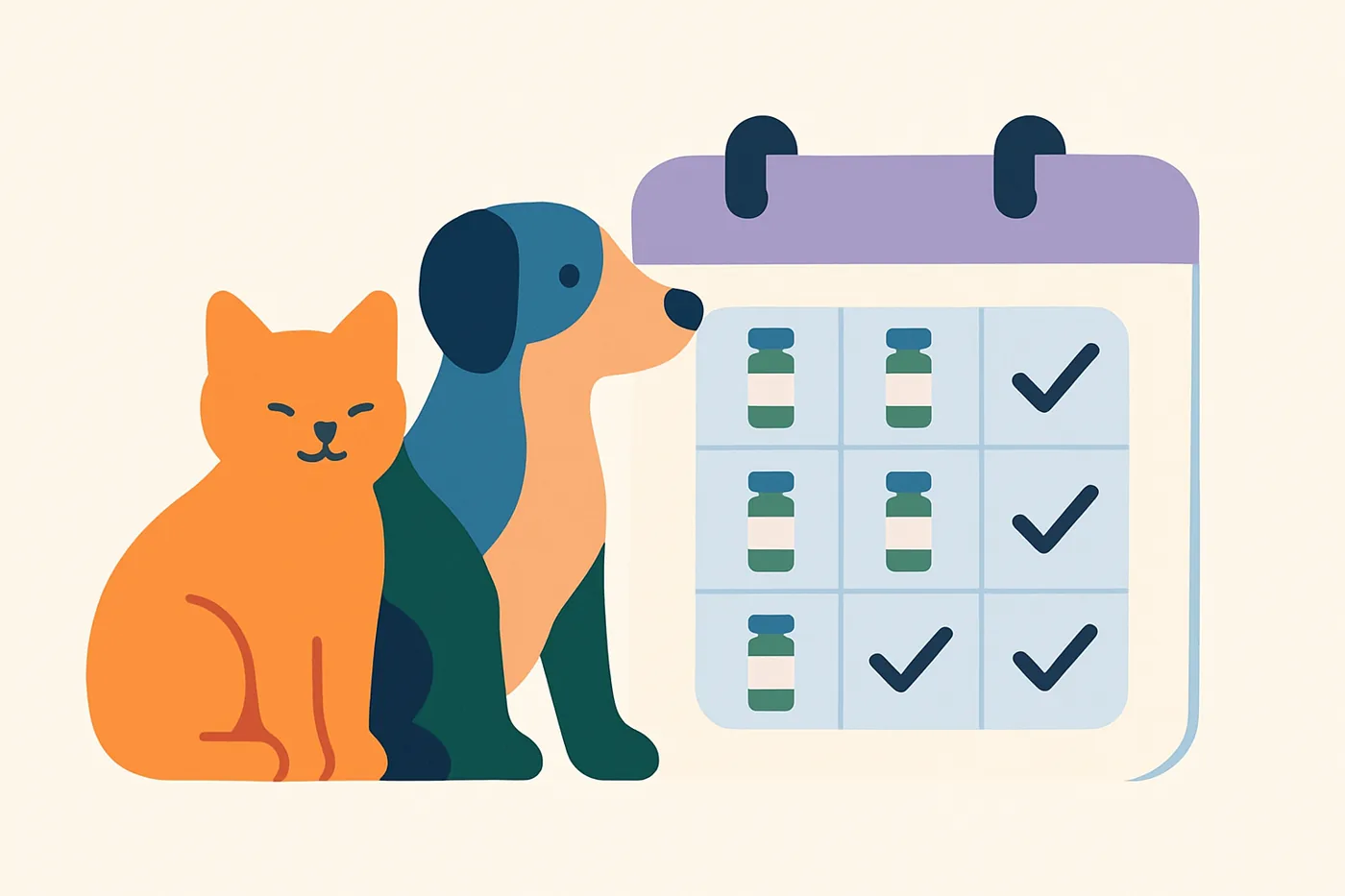
- Vaccine/parasite prevention dates
- Vet appointments
For critical tasks, “I thought someone else did it” is not acceptable. These tasks should always have one owner and one confirmation method.
Step 2: Assign tasks to “time blocks,” not to people
People aren’t always home, and schedules change. That’s why it’s more reliable to assign responsibilities to time blocks—like “Feeding between 7:00–10:00 AM”—instead of “Ayşe feeds the dog.”
A simple recommended framework:
- Morning block: Food + water + bathroom (short walk)
- Evening block: Food + water + bathroom (long walk/play)
- Night check (optional): Water, bathroom, quick potty break
For each block, choose a primary person and a “backup.” The backup only steps in if the block hasn’t been completed.
Step 3: Prevent double feeding with the single-source rule
Double feeding usually isn’t about hunger—it’s about communication gaps. The fix: track feeding decisions in one single place.
Practical rules you can use
- Don’t top off the bowl; serve measured portions. (Even with kibble, measuring keeps things under control.)
- Set a daily treat limit. Putting the day’s allowance into a small container/bag works well.
- A completion signal after feeding is mandatory: Leave a clear “done” marker that everyone can see.
Your completion signal can be analog: a fridge magnet, a flipped card on a container, a checked box on a chart. If you prefer digital, marking the feeding task as “completed” in an app like Snappet answers who fed the dog in seconds.
Step 4: Set a “minimum standard” to reduce missed walks
Walks are the item most likely to slip—because the duration varies, the weather matters, and everyone may assume “someone else will do it.” What works here is minimum standard + flexibility.
How to write a minimum standard
- At least X potty breaks per day (e.g., 3)
- At least 1 long walk (e.g., 25–40 minutes, adjusted to your dog)
- An indoor alternative (when weather is bad: 10 minutes of brain games + a quick potty break)
Write this on one page and post it where everyone can see it. That way, walks aren’t “optional”—they’re the household standard. Confirm the ideal frequency and duration with your vet based on factors like age, breed, and joint/heart issues.
Step 5: The only way to say “done”: a checklist
Everyone needs to interpret completion the same way. A checklist is the simplest and most effective tool for that.
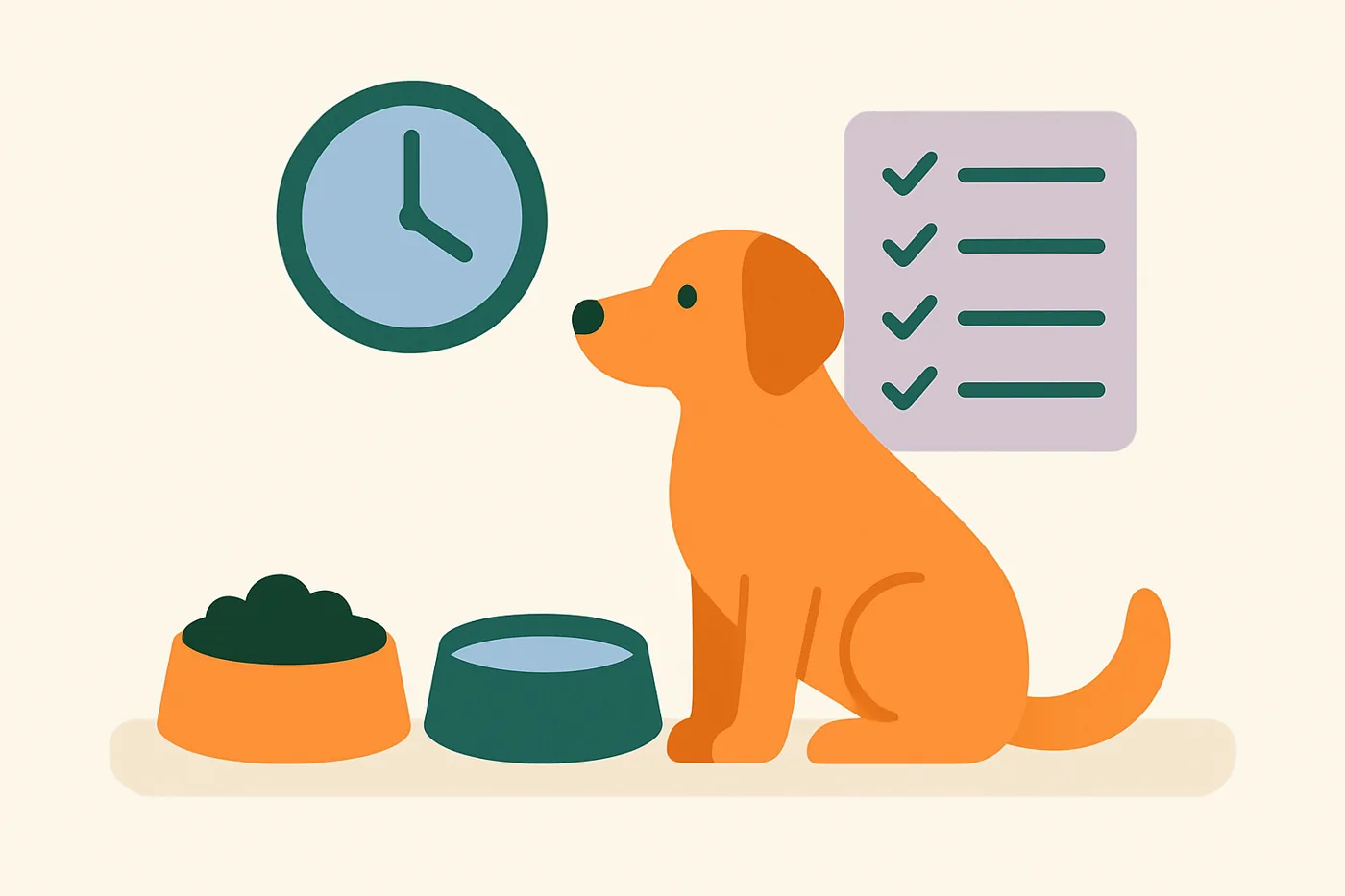
Sample daily checklist
- Morning feeding completed
- Water refreshed
- Potty break completed
- Evening feeding completed
- Evening walk/play completed
You can hang the list on the fridge or keep it as a digital task list. The key is that it lives in one place and that it doesn’t count as done until it’s checked off.
Step 6: For critical tasks, skip “double-checking”—use “single owner + record”
For critical tasks like medications and parasite prevention, having two people “double-check” can sound safer, but in practice it can drag out the “Did you give it?” loop. A safer approach is:
- Single owner: Whoever is assigned is responsible.
- Written record: Log it with date and time.
- Visual proof (optional): A marked note next to the medication box or an in-app record.
Keep vet/vaccine documents in one place as well. If you want a digital archive, tracking appointments and vaccine dates with reminders makes things easier.
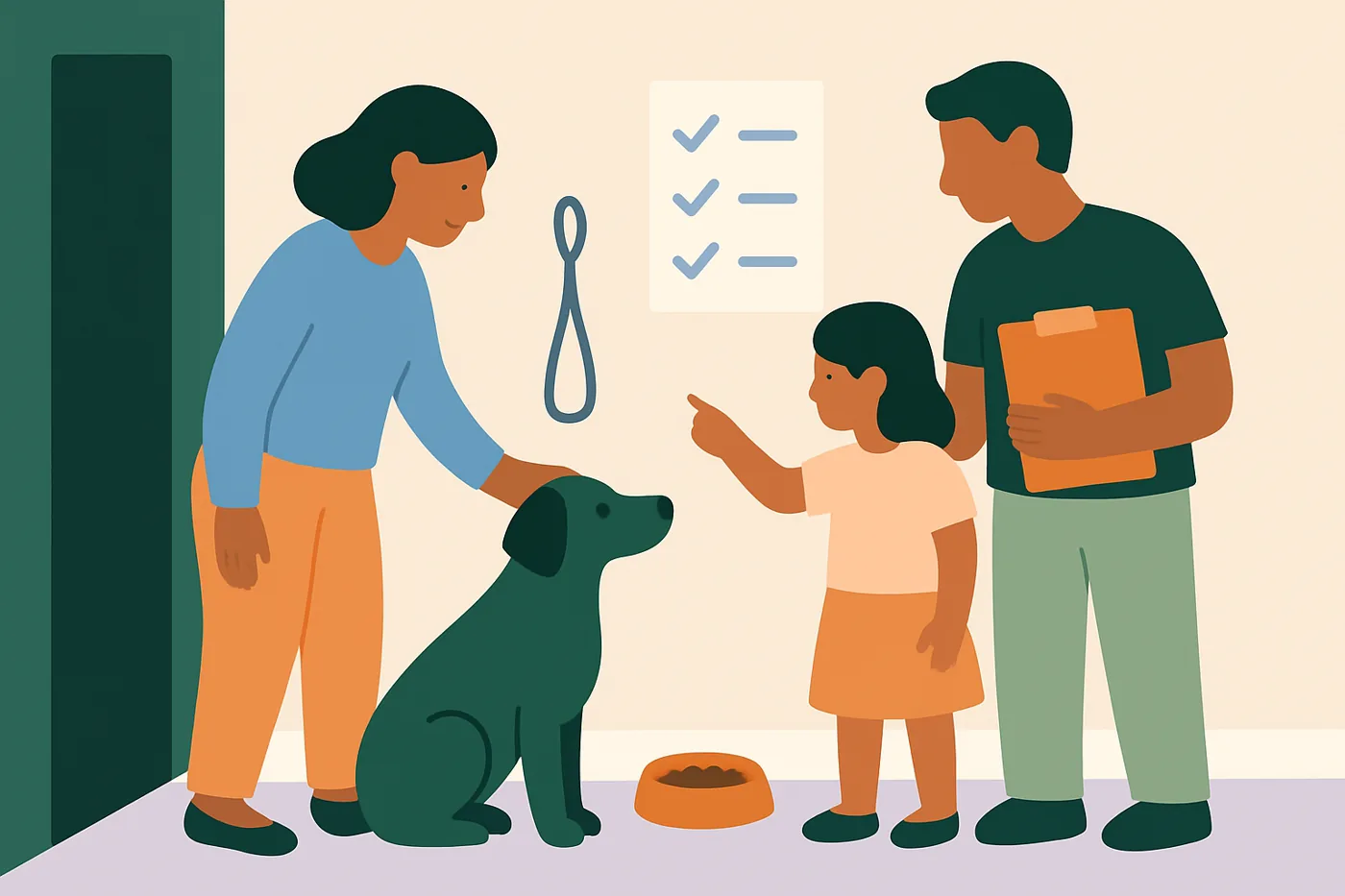
Step 7: The 10-minute family meeting: Roles, rules, exceptions
This system needs a short family meeting to work. You don’t need a long discussion—10 minutes is enough.
Meeting agenda
- Approve the care list (routine + critical).
- Assign time blocks (morning/evening/night).
- Choose the completion signal (chart/app).
- Set an exception rule: “If the assigned person isn’t home, the backup takes over and logs it.”
If you have kids, give age-appropriate tasks: checking the water bowl, preparing the food bowl (an adult decides whether to feed), bringing the leash, etc. That’s how family care becomes genuinely shared.
Step 8: Common breakdowns and practical fixes
“I thought I did it”
- Fix: If it isn’t checked off, it isn’t done.
- Extra: Pick one single checkpoint (fridge/app).
Double feeding
- Fix: Measured portions + mark it right after feeding.
- Extra: A daily treat quota.
Missed walks
- Fix: Minimum standard + lock the “long walk” into the evening block.
- Extra: Bad-weather plan (quick potty break + indoor play).
The feeling that “one person always does it”
- Fix: Rotate time blocks weekly (e.g., swap weekdays/weekends).
- Extra: Make completed tasks visible; visibility boosts motivation.
Example: A simple 1-week plan for a family of four
The plan below is a template—adjust it to your work hours.
- Morning block: Parent 1 (backup: Teen 1)
- Evening block: Parent 2 (backup: Teen 2)
- Long walk: Part of the evening block
- Critical tasks (meds/vaccine tracking): Parent 1 + logging required
The goal of this template is to make it unambiguous who’s on duty each day. If you’re using digital tracking, assigning tasks to family members in Snappet and marking them complete reduces the mental load of “Did it get done?”
Final check: Can your system answer “yes” to 3 questions?
- Who fed the dog today? Can you find out in 5 seconds?
- Is there any critical task not done right now? (meds, vaccine date, appointment)
- If one person is away for 2 days, does the system still run on its own?
If the answer is yes to all three, you’ve built a solid foundation for sharing pet-care responsibilities. Add detail as needed—but keep it as simple as possible.
FAQ
How do we solve “Who fed the dog?” without arguments?
Choose a single logging point (a fridge chart or a digital task list) and follow the rule: if it isn’t marked, it didn’t happen. Serving measured portions and leaving a marker also reduces double feeding.
How should kids be included in pet care?
Give age-appropriate, low-risk tasks: checking the water, prepping the food bowl, bringing the leash, brushing, etc. Keep critical decisions like feeding and medication clearly under adult responsibility.
What’s the safest way to manage medications and vaccine tracking as a family?
Assign a single owner and log every administration with date and time. Keep documents and appointments in one place. Follow your veterinarian’s dosing schedule; if you’re unsure, call the clinic.